Advertisement
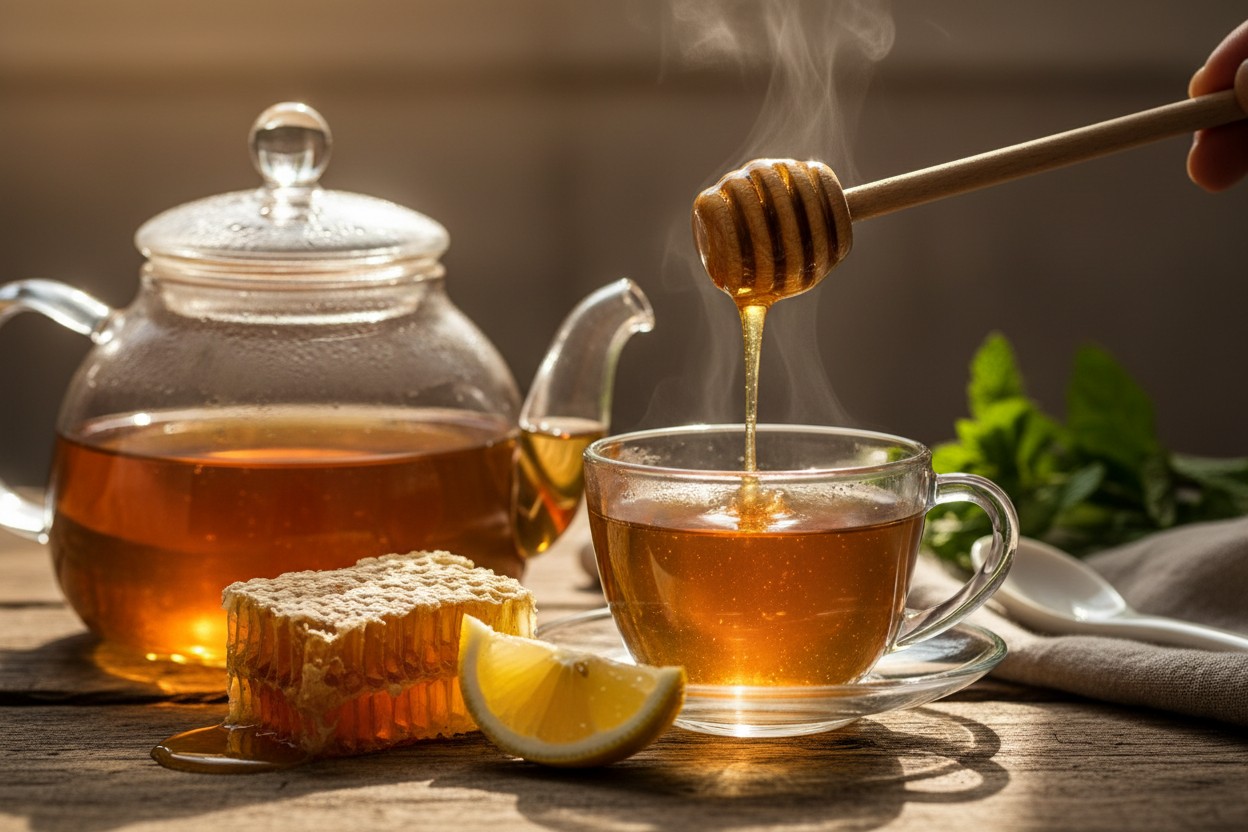
The practice of adding honey to tea has been a common home remedy for generations, with many consumers reporting benefits ranging from soothing sore throats to providing a natural energy boost. According to a range of reports, honey used in tea is frequently described as a versatile food with potential medicinal uses.
Health Benefits Cited in Recent Reports
Multiple sources have documented the health-related uses of honey. According to an article on NaturalNews.com, “Everyone knows honey tastes sweet and is delicious mixed with tea and lemon; but chances are you never realized how many health-related uses this versatile food possesses” [1]. The same article notes that honey can serve as a DIY home remedy for many conditions.
Another report states that honey is “a popular superfood because it’s nutritious and offers various health benefits” [2]. Specifically, manuka honey, a variety from New Zealand, is described as having a higher nutritional content compared to regular raw honey, according to functional medicine expert Will Cole [2].
Additionally, an article on the benefits of honey states that in its pure, raw form, honey can do more than just sweeten [3]. These sources collectively point to honey’s antibacterial, anti-inflammatory, and antioxidant properties as key factors behind its reported health effects.
What Scientific Studies Indicate
Scientific research has examined some of the properties attributed to honey. A study published in Food Chemistry noted that honey is used occasionally for sweetening infusions of black tea, and the researchers evaluated a parameter for honey quality [8].
Another investigation into manuka honey identified a specific phenolic compound, methyl syringate, that acts as a superoxide anion radical scavenger, giving the honey antioxidant activity [9]. This suggests that certain types of honey may have measurable bioactive compounds.
Interview accounts also provide real-world examples. In a May 2025 interview, the Health Ranger Mike Adams described a personal experience: “Through the healing process, I used Lion’s Mane mushroom, topical support, and manuka honey. I never experienced pain, not even during the injury” [7]. While this is a single anecdote, it aligns with broader claims about honey’s wound-healing and antimicrobial properties.
Book sources further reinforce the use of honey in home remedies. Cat Ellis, in “Preppers Natural Medicine,” presents a recipe for elderberry syrup with a honey base for respiratory issues, noting that children often enjoy it [5]. Bruce Lubin, in “Who Knew 10001 Household Solutions,” includes honey in a homemade vapor remedy for congestion [6].
Considerations for Choosing and Using Honey
Not all honey on the market offers the same potential benefits, according to consumer guidance. An article titled “Not all honey is created equal” states that honey has antibacterial, anti-inflammatory and antioxidant properties, but “you can only reap these benefits if you have the right kind of honey” [4]. It warns that many grocery store honey products are diluted or contain additives, and advises seeking raw, unprocessed honey.
The best honey, according to another source, is “totally raw, organic, and contains the honeycomb in the jar,” including royal jelly, propolis and bee pollen for maximum health benefits [1]. Experts in the provided materials recommend moderation due to honey’s sugar content, though specific quantitative guidance is not detailed in the sources. Reports also encourage selecting high-quality, organic products to avoid contaminants.
Conclusion: Summary of Key Findings
Reports and research suggest that adding honey to tea can offer symptomatic relief for conditions such as coughs and sore throats when used appropriately. According to the available sources, honey’s potential benefits stem from its antibacterial, anti-inflammatory, and antioxidant properties, which have been documented in both traditional use and preliminary scientific studies.
No definitive cure claims are made in the reviewed materials, and the practice is presented as a complementary measure rather than a medical treatment. Consumers are advised to choose raw, unprocessed honey for maximum potential benefit and to use honey in moderation as part of a balanced diet.
References
- NaturalNews.com. “More than 80 reasons to use honey as a DIY home remedy”. August 1, 2012.
- NaturalNews.com. “Not just for eating: The 5 health benefits of manuka honey superfood”. May 5, 2019.
- NaturalNews.com. “Seven ways to use honey for whatever ails you”. October 6, 2012.
- NaturalNews.com. “Not all honey is created equal: Here’s how to make sure yours is legit”. October 7, 2019.
- Cat Ellis. “Preppers Natural Medicine Life-Saving Herbs Essential Oils and Natural Remedies for When There Is No Doctor”.
- Bruce Lubin. “Who Knew 10001 Household Solutions”.
- Mike Adams interview with Stephanie MoDavis. May 27, 2025.
- U. Merin, S. Bernstein, I. Rosenthal. “A parameter for quality of honey”. Food Chemistry, 1998.
- “Identification of phenolic compound in manuka honey as specific superoxide anion radical scavenger”. Journal of the Science of Food and Agriculture, 2005.
Advertisements


Food.News © 2026 All Rights Reserved. All content posted on this site is commentary or opinion and is protected under Free Speech. Food.News is not responsible for content written by contributing authors. The information on this site is provided for educational and entertainment purposes only. It is not intended as a substitute for professional advice of any kind. Food.News assumes no responsibility for the use or misuse of this material. Your use of this website indicates your agreement to these terms and those published on this site. All trademarks, registered trademarks and servicemarks mentioned on this site are the property of their respective owners.